Surviving the Heatwave with Children: Evidence-Based Tips for Parents
When a heatwave arrives, many parents notice changes in their child’s behaviour almost immediately.
Children who are normally happy and easy-going may become emotional, clingy, irritable or overtired. Sleep can suddenly become disrupted, appetites may change, and even the simplest daily activities can feel more challenging.
If you’re currently surviving the heatwave with children, please know you’re not alone.
As a paediatric nurse, sleep consultant and mum, I know how exhausting hot weather can be for families. Whilst we often focus on keeping children entertained during the summer months, our priority during a heatwave should be much simpler: keeping children safe, comfortable, hydrated and well rested.
In this article, I’ll share practical, evidence-based tips for surviving the heatwave with children, including what research tells us about hydration, sleep, sun safety and managing the effects of extreme temperatures.
Why Heatwaves Affect Children More Than Adults
Children are particularly vulnerable during periods of extreme heat.
According to the UK Health Security Agency (UKHSA), babies and young children are at greater risk of heat-related illness because their bodies are less efficient at regulating temperature compared to adults.
Children:
- Produce more heat relative to their body size.
- Sweat less efficiently.
- Become dehydrated more quickly.
- Depend on adults to recognise signs of overheating.
Research published in The Lancet Planetary Health has also highlighted that children are among the population groups most vulnerable to rising global temperatures and heat-related health complications.
This means that during a heatwave, children may experience:
- Increased irritability
- Reduced concentration
- Fatigue
- Headaches
- Poor sleep
- Reduced appetite
- Emotional dysregulation
Many parents worry that their child’s behaviour has suddenly changed.
In reality, they may simply be struggling to cope with the physical effects of the heat.
My Number One Tip: Lower Your Expectations
If there is one thing I would encourage every parent to do during a heatwave, it is this:
Lower your expectations.
The house does not need to be spotless.
You do not need to plan educational activities every hour.
You do not need to feel guilty if screen time increases slightly while everyone hides indoors during the hottest part of the day.
When temperatures are exceptionally high, survival mode is sometimes enough.
Research consistently shows that heat can negatively affect mood, concentration and emotional regulation in both adults and children.
In other words, if your child seems more emotional, more demanding or less cooperative than usual, there is a physiological reason for it.
The goal this week is not perfection.
The goal is keeping everyone cool, hydrated and safe.
The Importance of Hydration During a Heatwave
One of the biggest concerns during hot weather is dehydration.
According to the NHS, children can become dehydrated more quickly than adults, especially if they are running around outdoors, sweating excessively or refusing drinks.
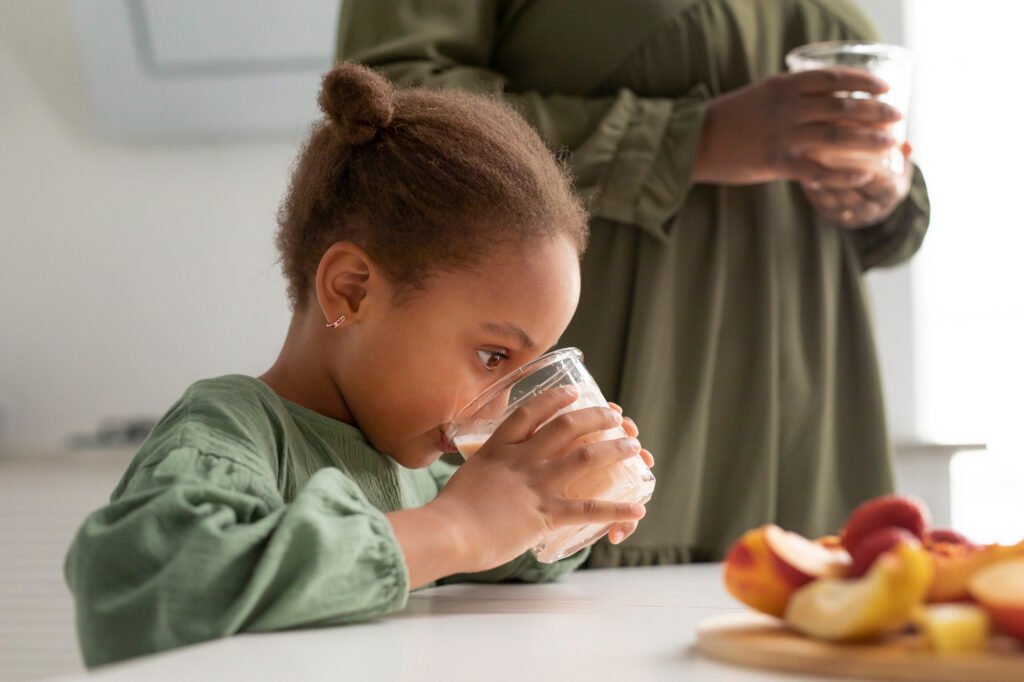
Keeping children well hydrated is one of the most important ways to help them stay safe during hot weather.
Signs of dehydration may include:
- Dry lips
- Dry mouth
- Dark urine
- Fewer wet nappies
- Headaches
- Dizziness
- Lethargy
- Irritability
However, getting children to drink water isn’t always easy.
Many parents find themselves repeating:
“Please have a drink.”
Again and again.
Instead of focusing only on drinks, think about hydration from food too.
Hydrating Foods Children Often Enjoy
Many fruits and vegetables contain over 90% water and can contribute significantly to hydration

Simple ways to keep babies and children cool, hydrated and sleeping well during a heatwave.
Great options include:
🍉 Watermelon
🥒 Cucumber
🍓 Strawberries
🍊 Oranges
🍍 Pineapple
🍑 Peaches
🍇 Grapes (cut safely for younger children)
🥭 Mango
🥬 Lettuce
🍦 Homemade ice lollies
🥤 Fruit smoothies
🧊 Frozen fruit snacks
Research published in the European Journal of Clinical Nutrition suggests that water-rich foods can contribute meaningfully to daily hydration levels.
Many children are far more willing to eat their fluids than drink them.
Sun Safety: Protecting Children During a Heatwave
When surviving the heatwave with children, sun protection is essential.
The NHS recommends avoiding direct sun exposure during the hottest hours of the day, typically between 11am and 3pm.
During these hours, ultraviolet (UV) radiation is strongest.
Practical ways to stay safe include:
- Seeking shade wherever possible.
- Planning outdoor activities early in the morning.
- Choosing evening walks rather than midday outings.
- Wearing wide-brimmed hats.
- Dressing children in loose-fitting clothing.
- Using appropriate sunscreen.
Shade remains one of the most effective forms of sun protection.
Even a simple pop-up shelter, tree cover or parasol can significantly reduce heat exposure.
Special Considerations for Babies Under Six Months
Babies under six months require additional protection during hot weather.
The NHS advises that young babies should be kept out of direct sunlight wherever possible.
Unlike older children, babies cannot effectively regulate their body temperature.
Research has shown that infants are at increased risk of overheating due to their immature thermoregulatory systems.
Parents should:
- Prioritise shade.
- Use lightweight clothing.
- Offer regular breastfeeds or bottle feeds.
- Avoid excessive layers.
- Ensure good airflow around prams and sleep spaces.
One important point:
Never cover a pram completely with blankets or muslins.
Studies have demonstrated that covering prams can dramatically increase temperatures inside the pram, even when outside temperatures appear moderate.
How Heat Affects Children’s Sleep
One of the most common questions I receive during summer is:
“Why has my child suddenly stopped sleeping well?”
The answer is often simple.
They’re too hot.
Sleep and body temperature are closely linked.
Research published in the journal Sleep Medicine Reviews shows that a small drop in core body temperature helps initiate sleep.
When the environment is excessively warm, this cooling process becomes more difficult.
As a result, children may experience:
- Longer bedtimes
- Difficulty falling asleep
- Frequent night wakings
- Early morning waking
- Restless sleep
- Increased daytime tiredness
This can happen even if your child has previously been sleeping well.
Why Sleep Problems Often Increase During a Heatwave
Sleep deprivation and heat create a challenging cycle.
Children who sleep poorly become more emotional and less resilient.
At the same time, overtired children often struggle even more with falling asleep.
Research from the American Academy of Sleep Medicine has consistently demonstrated the importance of adequate sleep for emotional regulation, learning and behaviour.
During a heatwave, it is therefore completely normal to see:
- More tantrums
- Increased clinginess
- Reduced patience
- Heightened emotional responses
This does not mean your sleep routine has failed.
It simply means your child is responding to environmental conditions.
Practical Tips for Keeping Children’s Bedrooms Cool
One of the best ways of surviving the heatwave with children is focusing on the sleep environment.

Keeping curtains or blackout blinds closed during the hottest part of the day can help reduce heat entering your child’s room.
Simple strategies can make a significant difference.
During the Day
- Keep curtains and blinds closed.
- Block direct sunlight.
- Turn off unnecessary electronics.
- Keep bedroom doors closed.
During the Evening
- Open windows once temperatures drop.
- Create cross-ventilation where safe.
- Use fans according to manufacturer guidance.
Before Bed
- Offer a cool bath.
- Dress children appropriately for room temperature.
- Use lightweight bedding.
- Avoid heavy sleep sacks if not required.
Remember that overheating increases the risk of disturbed sleep.
Comfort should always be prioritised.
Should You Change Your Sleep Routine During a Heatwave?
Parents often ask whether bedtime should be moved later during very hot weather.
In most cases, I recommend maintaining your normal routine as much as possible.
Children benefit from predictability.
Keeping familiar bedtime routines helps signal to the brain that sleep is approaching, even when conditions are less than ideal.
This might include:
- Bath time
- Pyjamas
- Stories
- Cuddles
- Bedtime phrases
Consistency provides reassurance during periods of disruption.
Looking After Yourself Matters Too
As parents, we often put ourselves at the bottom of the priority list.
However, surviving the heatwave with children can be physically and emotionally exhausting.
Research shows that adults experience increased irritability, fatigue and reduced cognitive performance during periods of extreme heat.

Practical heatwave survival tips to help babies and children stay cool, hydrated and sleep better during hot weather.
Sound familiar?
If you’re feeling overwhelmed, exhausted or less patient than usual, that is not a sign that you’re failing.
It’s a normal response to difficult environmental conditions.
Try to:
- Drink regularly.
- Eat balanced meals.
- Rest whenever possible.
- Ask for support.
- Take breaks from the heat.
Looking after yourself helps you look after your children.
When to Seek Medical Advice
Contact a healthcare professional if your child shows signs of heat-related illness, including:
- Extreme lethargy
- Difficulty waking
- Persistent vomiting
- Signs of severe dehydration
- Rapid breathing
- High temperature that does not improve
- Confusion
- Seizures
If you are concerned about your child’s condition, seek medical advice immediately.
Final Thoughts on Surviving the Heatwave with Children
Surviving the heatwave with children isn’t about creating magical summer memories every day.
Sometimes it’s simply about getting through the week safely.
If your child is more emotional, sleeping poorly, eating differently or needing extra comfort, this is completely understandable.
Heat affects all of us.
Give yourself permission to slow down.
Choose easy meals.
Stay in the shade.
Offer plenty of fluids.
Keep routines simple.
And remember that this phase is temporary.
The cooler weather will return, sleep will improve, and normal routines will come back.
Until then, focus on what matters most:
Keeping your children safe, comfortable and loved.
Ready for Better Sleep?
At Bluebell Sleep Consulting, I offer gentle, responsive sleep support for babies, toddlers and preschoolers, helping families achieve better sleep without using cry-it-out methods.
For safe sleep advice, visit The Lullaby Trust.
Book a free discovery call today and let’s create a personalised sleep plan for your child and family.
References
- UK Health Security Agency (UKHSA). Beat the Heat: Staying Safe in Hot Weather.
- NHS. Keeping Babies and Children Safe in Hot Weather.
- World Health Organization (WHO). Heat and Health Guidance.
- Sleep Medicine Reviews. The Relationship Between Sleep and Thermoregulation.
- American Academy of Sleep Medicine. Sleep and Child Health.
- The Lancet Planetary Health. Children’s Vulnerability to Climate Change and Extreme Heat.