Phones, tablets, televisions and other screens have become part of everyday family life. They can be helpful for entertainment, education and even giving parents a much-needed moment to prepare dinner or finish a task.
But when bedtime approaches, many parents wonder:
Does blue light affect children’s sleep?
You may have heard that screens “stop melatonin” or that children should never look at a screen before bed. The reality is a little more nuanced.
Research suggests that evening light exposure and screen use can influence children’s sleep, but blue light is only one part of the picture. The brightness of the light, how long a child is exposed to it, when they are exposed, what they are doing on the device and whether screen time is delaying bedtime can all matter.
Understanding the science can help families make practical changes without creating unnecessary anxiety around screens.
Table of Contents
- What Is Blue Light?
- How Does Light Affect a Child’s Body Clock?
- What Is Melatonin?
- Does Blue Light Affect Children’s Sleep?
- Why Can Screens Before Bed Affect Sleep?
- Evening Light Can Affect Melatonin
- Screens Can Delay Bedtime
- Content Can Keep the Brain Alert
- Screens Can Replace the Wind-Down Routine
- What Does UK Guidance Say About Screens Before Bed?
- What About Babies?
- Daylight Is Just as Important as Darkness
- Do Blue-Light Filters or Night Mode Solve the Problem?
- A Gentle Screen-to-Sleep Routine
- What If My Child Sleeps Well Despite Evening Screens?
- The Bottom Line: Does Blue Light Affect Children’s Sleep?
- When to Seek More Support
- References and Further Reading
What Is Blue Light?
Blue light is part of the visible light spectrum. It has a relatively short wavelength and is naturally present in daylight.
In fact, blue-enriched daylight during the daytime is not something we need to fear. Natural daylight is one of the strongest environmental signals helping regulate our internal body clock.
Artificial sources of light can also contain blue wavelengths, including:
- smartphones
- tablets
- televisions
- computers
- LED lighting
- gaming devices
The concern around blue light and children’s sleep is mainly about exposure during the evening, when the body is preparing for sleep.
How Does Light Affect a Child’s Body Clock?
Humans have an internal biological timing system called the circadian rhythm.
This approximately 24-hour rhythm helps regulate many processes in the body, including sleep and wakefulness.
Light is one of the most important signals helping the brain understand whether it is daytime or nighttime.
Bright light during the morning and daytime supports wakefulness and helps synchronise the circadian rhythm. As evening arrives and light levels naturally decrease, the body receives signals that nighttime is approaching.
One of the processes involved is the production of melatonin.
What Is Melatonin?
Melatonin is a hormone produced primarily by the pineal gland. Its production increases during the evening as part of the body’s preparation for nighttime.
It is sometimes called the “sleep hormone”, but this can be slightly misleading.
Melatonin does not simply switch a child to sleep. Instead, it helps communicate biological nighttime to the body and supports the timing of sleep.
Light exposure during the evening can influence this process.
Research has demonstrated that children’s circadian systems can be particularly responsive to evening light.
One small experimental study involving preschool-aged children found that exposure to bright light of approximately 1,000 lux for one hour before bedtime resulted in substantial melatonin suppression. Melatonin remained suppressed for some time after the bright-light exposure ended.
This is important because it demonstrates that young children’s biological systems can respond strongly to evening light exposure.
However, this study investigated bright light rather than ordinary household screen use. It therefore should not be interpreted as meaning that watching a short programme before bed will automatically suppress melatonin to the same degree.
So, Does Blue Light Affect Children’s Sleep?
Potentially, yes, particularly when exposure happens during the evening.
But the relationship between screens and children’s sleep is more complicated than blue light alone.
A systematic review examining electronic media use and sleep in children and adolescents found that electronic media use was generally associated with shorter sleep duration. The evidence was stronger in children aged 6 to 15 than in children aged 0 to 5.
For children aged 6 to 12, electronic media use was also associated with later bedtimes and poorer sleep quality.
Importantly, research in this area cannot always prove that screens directly cause sleep difficulties. Families whose children already struggle with sleep may use screens differently, and many studies rely on parents or children reporting their own screen and sleep habits.
So rather than thinking:
“Blue light equals bad sleep.”
It is more accurate to think:
“Evening screen use may influence sleep through several different pathways.”
Why Can Screens Before Bed Affect Sleep?
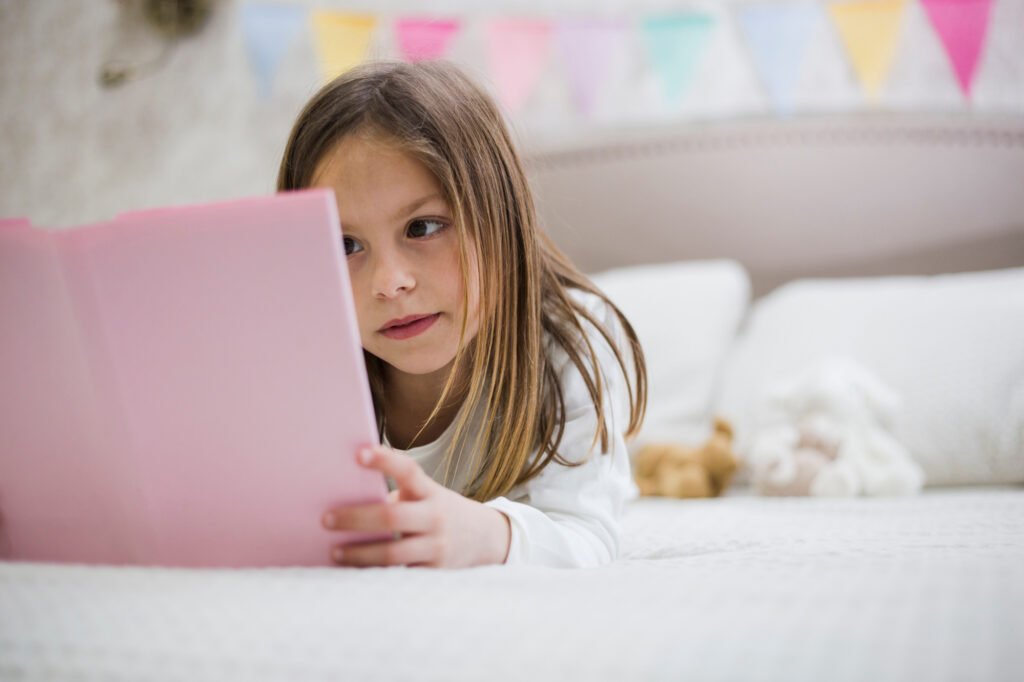
Evening screen use may affect children’s natural sleep-wake rhythm and make it harder to wind down before bed.
1. Evening Light Can Affect Melatonin
Light reaching the eyes sends information to the brain about the time of day.
Evening light exposure can interfere with the biological signals associated with nighttime, including melatonin production.
Children may be particularly sensitive to evening light. Research in preschool children has demonstrated strong melatonin suppression following bright evening light exposure.
The intensity, duration and timing of light exposure all appear to matter.
2. Screens Can Delay Bedtime
Sometimes the biggest issue is not the blue light at all.
It is simply that screen time replaces sleep time.
Imagine a child usually starts getting ready for bed at 7pm, but they are watching a favourite programme or playing a game.
“Just five more minutes” can easily become another 20 or 30 minutes.
If the morning wake-up time remains the same, the child may simply get less sleep overall.
Research reviews consistently identify this time displacement as one possible explanation for the relationship between screen use and shorter sleep.
3. Content Can Keep the Brain Alert
What children are doing on a screen also matters.
Watching a calm, familiar programme with a parent is very different from playing a fast-paced game, watching exciting videos or interacting with stimulating content.
Emotional or highly stimulating content can increase alertness at exactly the time we want the nervous system to begin winding down.
This is why focusing only on the colour of the light may miss an important part of the picture.
4. Screens Can Replace the Wind-Down Routine
The period before bedtime helps children transition from daytime activity towards sleep.
A predictable bedtime routine might include:
bath → pyjamas → teeth → books → cuddle → bed.
When screens fill most of this period, children can lose some of those quieter signals that help them recognise that bedtime is approaching.
Predictability is especially valuable for young children.
What Does UK Guidance Say About Screens Before Bed?
The NHS advises that young children should not use laptops, tablets or phones during the 30 to 60 minutes before bedtime, explaining that light from screens can interfere with sleep.
This doesn’t mean parents need to panic if their child occasionally watches television close to bedtime.
Sleep recommendations work best when they support family life rather than becoming another source of parental guilt.
Instead, think about creating a screen-free transition before sleep.
For many families, around an hour is a practical target. For others, beginning with 30 minutes may be much more realistic.
Consistency matters more than perfection.
What About Babies?

For babies, healthy sleep is supported by the overall pattern of light and darkness across the day, rather than focusing on blue light alone.
There is considerably less research specifically investigating blue light and screen exposure in babies compared with older children.
For babies, I would therefore avoid making strong claims such as “blue light causes night waking.”
Infant sleep is influenced by many factors, including:
- age and development
- feeding
- sleep pressure
- circadian rhythm development
- temperament
- environment
- parental interaction
- illness and discomfort
Instead of focusing on blue light alone, parents can support the developing body clock through the overall pattern of light and darkness across the day.
During daytime, babies can experience normal household activity and plenty of natural daylight.
As bedtime approaches, the environment can gradually become calmer and dimmer.
During night feeds and changes, keeping lighting low where safely possible may help maintain the difference between daytime and nighttime.
Daylight Is Just as Important as Darkness
When discussing children’s sleep, we often focus on what families should remove.
But there is another side to circadian health:
children need light during the day.
Research examining light exposure in children suggests that the timing and intensity of light exposure matter. Daytime light, particularly natural outdoor light, provides an important signal to the circadian system.
So supporting sleep isn’t simply about switching screens off at night.
Think about the whole 24-hour day.
Encourage opportunities for outdoor play and natural daylight, particularly earlier in the day, alongside age-appropriate movement and activity.
Then, as evening approaches, gradually reduce stimulation and brightness.
This contrast between bright days and darker evenings can help reinforce the body’s natural day-night rhythm.
Do Blue-Light Filters or Night Mode Solve the Problem?
Many devices now include “night mode”, which reduces some of the shorter-wavelength blue light emitted by the screen.
This may reduce blue-light exposure, but it doesn’t remove all the other ways screens may affect sleep.
A child using a night-mode tablet may still:
- delay bedtime
- become absorbed in what they are watching
- feel excited by a game
- resist switching the device off
- miss part of their usual bedtime routine
- remain exposed to light from the screen
So I wouldn’t rely on blue-light filters as the main sleep strategy.
Creating some separation between screens and bedtime is usually more useful.
A Gentle Screen-to-Sleep Routine
You don’t need to suddenly remove every screen from your home.
Instead, try creating a predictable transition.
For example:
60 minutes before bed: screens go off.
45 minutes before bed: bath or quiet play.
30 minutes before bed: pyjamas and teeth.
15 minutes before bed: books, cuddles and dimmer lighting.
Bedtime: calm, familiar sleep environment.
Your family’s routine does not need to look exactly like this.
The goal is simply to give your child’s brain and body a clear message:
The busy part of the day is finishing. Sleep is coming.
What If My Child Sleeps Well Despite Evening Screens?
Then you don’t necessarily need to overhaul everything.
Children are individuals.
If your child is getting enough sleep, settles comfortably, wakes feeling refreshed and your family’s routine is working well, there may be no reason to become overly worried about occasional evening screen exposure.
But if bedtime regularly takes a long time, your child struggles to wind down, bedtime keeps getting later or they aren’t getting enough sleep, evening screen use is one factor worth looking at.
Sleep is rarely about one single thing.
The Bottom Line: Does Blue Light Affect Children’s Sleep?

A calm, screen-free activity can help children wind down and prepare for sleep
Evidence suggests that evening light and screen exposure can influence children’s sleep and circadian biology, including melatonin production.
However, blue light is not the whole story.
Screen use can also affect sleep by delaying bedtime, replacing sleep opportunities, increasing mental stimulation and interrupting the natural wind-down period before bed.
A practical approach is therefore not to fear screens, but to use them thoughtfully.
Aim for plenty of daylight and activity during the day, gradually reduce bright light in the evening and create a calm, predictable screen-free period before bedtime.
Small, realistic changes are often more sustainable than rigid rules.
And remember, if your child struggles with sleep, it doesn’t automatically mean screens are the cause. Children’s sleep is influenced by their age, development, sleep needs, routines, environment and individual temperament.
When to Seek More Support
If bedtime has become stressful, your child regularly takes a long time to fall asleep, wakes frequently or you are unsure whether their daily routine is supporting their sleep needs, looking at the whole sleep picture can help.
At Bluebell Sleep Consulting, I offer gentle, responsive and evidence-based baby and child sleep support tailored to your individual family.
Rather than focusing on one habit or asking families to follow rigid rules, I look at your child’s sleep as a whole, including their age, development, daytime sleep, sleep pressure, environment, routines and family circumstances.
Book a free discovery call to talk through what is happening with your child’s sleep and find out how I can support your family.
Sweet dreams,
References and Further Reading
NHS. Sleep and young children. NHS guidance recommends avoiding laptops, tablets and phones for around 30–60 minutes before bedtime because screen light may interfere with sleep.
Hartstein LE et al. (2018). Sensitivity of the circadian system to evening bright light in preschool-age children.Physiological Reports, 6(5), e13617. The experimental study found substantial melatonin suppression following bright evening light exposure in preschool-aged children.
Akacem LD et al. (2016/2017). Bedtime and evening light exposure influence circadian timing in preschool-age children: A field study. Neurobiology of Sleep and Circadian Rhythms. The study explored relationships between bedtime, evening light exposure and circadian timing in preschool children.
Lund L et al. (2021). Electronic media use and sleep in children and adolescents in western countries: a systematic review. BMC Public Health, 21, 1598. The review found electronic media use was generally associated with shorter sleep duration, although the strength of evidence varied by age and sleep outcome.
Hale L & Guan S. (2015). Screen time and sleep among school-aged children and adolescents: a systematic literature review. Sleep Medicine Reviews, 21, 50–58. Most studies reviewed reported an adverse association between screen use and at least one sleep outcome.
Martin KB et al. (2021). Interventions to control children’s screen use and their effect on sleep: a systematic review and meta-analysis. Journal of Sleep Research. Screen-reduction interventions produced small improvements in sleep duration, although the authors cautioned that the evidence could not establish screen reduction as the sole cause.