White Noise for Babies: Is It Safe? A Complete Parent’s Guide
If you’ve ever searched for ways to help your baby sleep, you’ve probably wondered whether white noise for babies is safe and whether it really works.
Many parents swear by it. Some babies seem to settle almost instantly when they hear the familiar “whooshing” sound. Others sleep for longer because everyday noises are masked.
But you’ve also probably seen worrying headlines:
- Can white noise damage my baby’s hearing?
- Will my baby become dependent on it?
- Should it stay on all night?
- When should I stop using it?
As a certified gentle sleep consultant with paediatric nursing background these are questions I hear regularly from families.
The reassuring news is that current evidence suggests white noise can be a useful sleep tool when used safely.
The key is understanding how loud it should be, where to place it, and how long to use it.
In this article, we’ll explore what the latest UK and international guidance says so you can make an informed decision for your family.
Table of Contents
- White Noise for babies. Yes or No?
- What Is White Noise?
- Why Does White Noise for Babies Help With Sleep?
- Does Research Show White Noise Works?
- My Perspective as a Gentle Sleep Consultant with Paediatric Nursing Background
- Is White Noise Safe for Babies?
- How Loud Should White Noise for Babies Be?
- Where Should You Place a White Noise Machine for Babies?
- Should White Noise for Babies Stay On All Night?
- Will My Baby Become Dependent on White Noise?
- When Should You Stop Using White Noise?
- Can White Noise Affect Speech or Brain Development?
- White Noise Is Not a Substitute for Safe Sleep
- Practical Tips for Using White Noise Safely
- Final Thoughts
- Frequently Asked Questions
- Need Support With Your Child’s Sleep?
- References
What Is White Noise?
White noise is a continuous sound containing many different frequencies played at the same intensity.
Examples include:
- A fan
- Rainfall
- Static
- A vacuum cleaner
- A dedicated white noise machine
Many parents also use:
- Pink noise
- Brown noise
- Ocean sounds
- Gentle fan sounds
While these are technically different from white noise, they are often grouped together because they work in a similar way.
Why Does White Noise for Babies Help With Sleep?
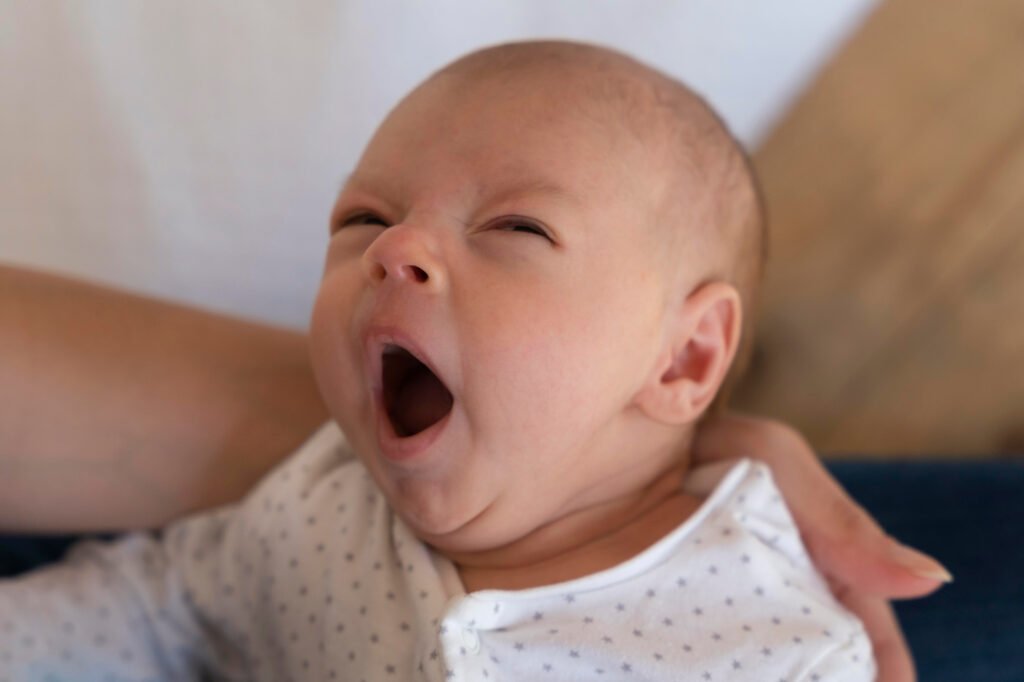
Recognising your baby’s tired cues can help you respond to their need for sleep.
Before birth, babies spend around nine months in an environment that isn’t quiet.
Inside the womb they constantly hear:
- Mum’s heartbeat
- Blood flowing
- Breathing
- Digestive sounds
- Muffled outside noises
Researchers estimate the womb can be surprisingly noisy, so complete silence after birth is actually something entirely new for babies. White noise may recreate a familiar background sound, helping some babies feel calmer.
White noise can also:
- Reduce the impact of sudden household noises
- Mask barking dogs, doorbells and traffic
- Create a consistent sleep cue
- Help babies transition between sleep cycles
For many families, it becomes part of a predictable bedtime routine.
Does Research Show White Noise Works?
Several studies suggest white noise may help some babies settle more quickly.
One early randomised trial found newborn babies exposed to white noise were more than three times as likely to fall asleep within five minutes compared with babies who were not exposed.
Other studies have shown benefits for:
- reducing crying
- improving settling
- increasing sleep duration in some infants
However, it’s important to understand that research is still limited.
Most studies involve relatively small numbers of babies, and there is less evidence about long-term effects.
This means white noise should be viewed as one helpful sleep tool rather than a solution to every sleep challenge.
My Perspective as a Gentle Sleep Consultant with Paediatric Nursing background
During my years working as a paediatric nurse, I saw first-hand how exhausting sleep deprivation can be for families. Now, as a certified gentle sleep consultant, I support parents who often feel overwhelmed by conflicting advice online.
White noise is one of the tools I sometimes recommend, but never as a “magic solution”. Every baby is different, and while white noise may help some little ones settle more easily, it works best alongside age-appropriate routines, responsive care and a safe sleep environment.
I always encourage parents to use it thoughtfully—keeping the volume low, placing the machine at a safe distance from the cot, and remembering that it should support healthy sleep habits rather than replace them.
Is White Noise Safe for Babies?
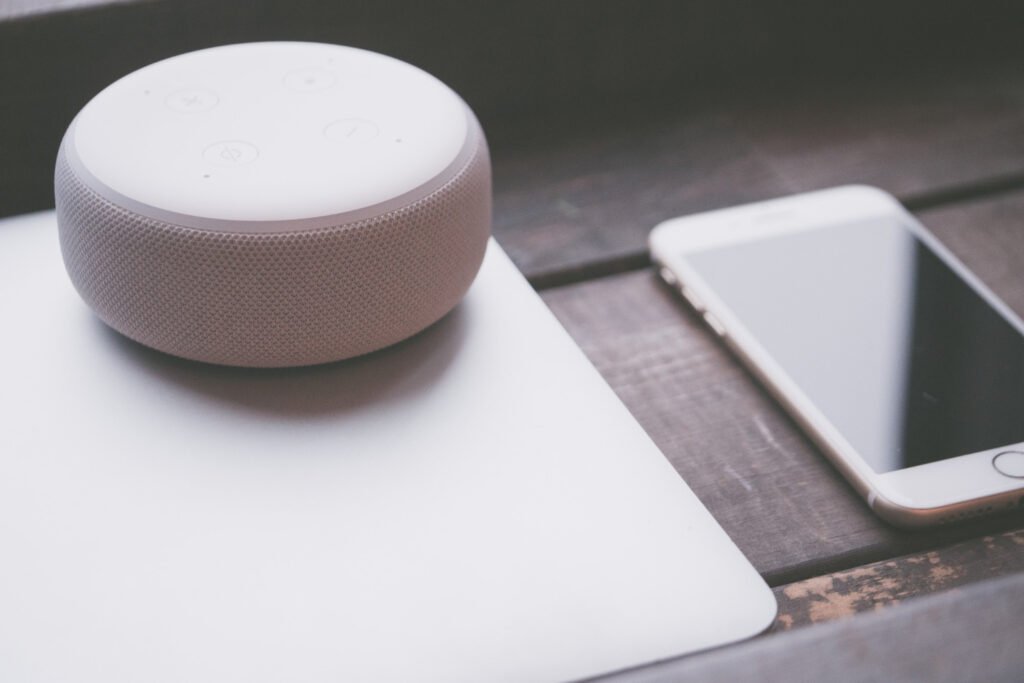
White noise can be a helpful sleep cue for babies when used safely.
Yes—when used correctly.
Neither the NHS nor The Lullaby Trust advises against using white noise itself.
Instead, safe sleep guidance focuses on creating a safe sleep environment while ensuring babies are not exposed to excessive noise.
The greatest concern is volume.
Very loud, prolonged noise exposure may affect hearing.
The American Academy of Pediatrics reviewed infant sleep machines and concluded that although they may help babies settle, they should always be used carefully because some machines can produce unexpectedly high sound levels.
How Loud Should White Noise for Babies Be?
This is probably the most important safety point
Current expert recommendations suggest aiming for around 50 dBA or lower at your baby’s sleep space. This is based on recommendations from the American Academy of Pediatrics and existing hospital nursery noise limits. If you’re unsure, using a free decibel meter app can help check the volume.
Fifty decibels is approximately the volume of:
- gentle rainfall
- a quiet conversation
- a calm shower
It should never sound loud.
If you need to raise your voice to talk over the machine, it is too loud.
Some parents like using a free decibel meter app on their phone to check the volume near the baby’s sleep space.
Remember that many commercial sound machines can exceed safe levels when turned up to maximum volume.
Where Should You Place a White Noise Machine for Babies?
Placement matters just as much as volume.
The machine should:
✅ Be across the room where possible
✅ Never sit inside the cot
✅ Never attach to the cot rails
✅ Never be right beside your baby’s head
The American Academy of Pediatrics advises positioning sleep machines as far away from the baby as practical, with many professionals recommending around 2 metres (7 feet) where possible.
Distance helps reduce sound intensity reaching your baby’s ears.
Should White Noise for Babies Stay On All Night?
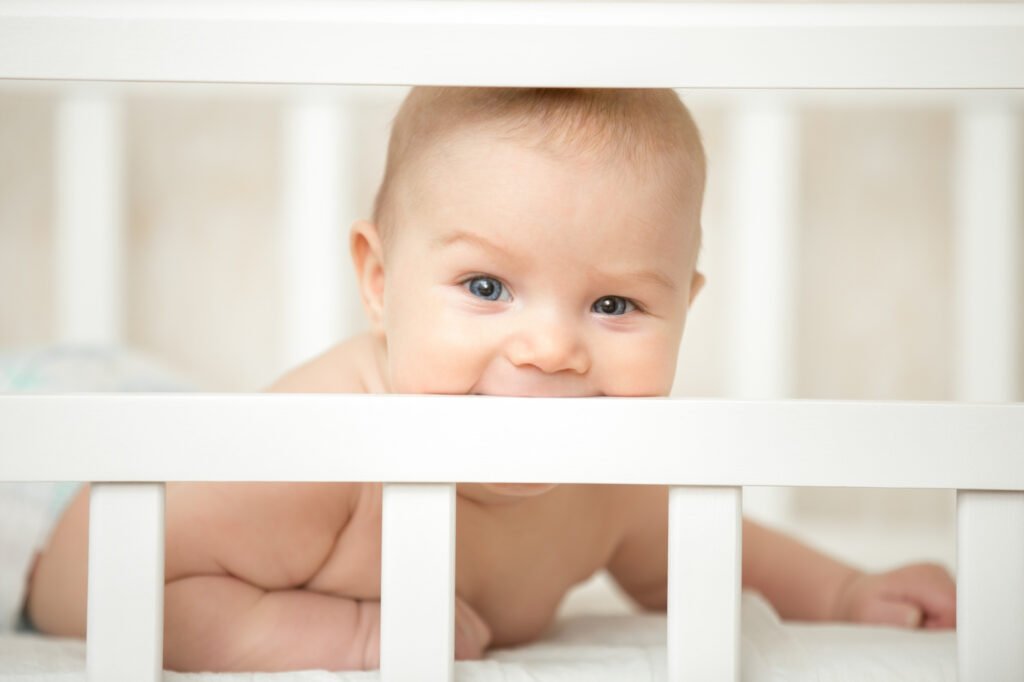
A calm sleep environment can help support healthy sleep habits for babies.
Parents often ask this.
The honest answer is that we don’t yet have strong evidence proving one approach is better than another.
Some babies sleep well with continuous white noise.
Others only need it while settling.
Many paediatric professionals recommend using:
- the lowest effective volume
- a timer if your baby settles easily
- or switching it off once baby is asleep if practical
The American Academy of Pediatrics suggests limiting duration where possible, especially avoiding unnecessarily loud exposure for many hours.
If leaving it on overnight helps prevent frequent waking, keep the volume low and the machine positioned safely away from your baby.
Will My Baby Become Dependent on White Noise?
Probably not in the way many parents fear.
Babies often develop sleep associations.
These are cues that signal it is time to sleep.
Healthy sleep associations can include:
- a bedtime routine
- a sleeping bag
- darkness
- cuddles
- a favourite comforter (when age appropriate)
- white noise
White noise is simply one possible sleep cue.
Many children naturally stop needing it as they grow.
If you later decide to remove it, you can usually reduce the volume gradually over one to two weeks rather than stopping suddenly.
When Should You Stop Using White Noise?
There is no evidence-based age when babies or toddlers must stop using white noise.
Some children stop naturally during infancy.
Others continue using it throughout the toddler years.
You might consider reducing it if your child:
- no longer seems to need it
- falls asleep easily without it
- sleeps well in different environments
- asks for a quieter bedroom
There is no need to rush if it continues helping your child sleep and it is being used safely.
Can White Noise Affect Speech or Brain Development?
Healthy sleep supports a baby’s overall wellbeing and development.
This question appears frequently online.
At present, there is no strong evidence that safely used white noise causes speech delays or harms brain development.
The main concern would be constant loud background noise, particularly during waking hours, because babies learn language through listening to speech and interacting with caregivers.
During the day, babies benefit from hearing:
- conversation
- songs
- reading
- normal household sounds
Sleep time is different.
White noise used during sleep at a safe volume has not been shown to interfere with language development.
White Noise Is Not a Substitute for Safe Sleep
Although white noise may help babies settle, it does not reduce the risk of SIDS.
Always follow safer sleep guidance, including:
- placing your baby on their back for every sleep
- using a firm, flat mattress
- keeping the cot free from pillows, toys and loose bedding
- sharing a room (not a bed) for at least the first six months
- avoiding overheating
- maintaining a smoke-free environment
White noise should be viewed as an optional comfort tool rather than part of safer sleep guidance.
Practical Tips for Using White Noise Safely
Recognising your baby’s tired cues can help you respond to their need for sleep.
If you choose to use white noise:
- Keep the volume below 50 dB
- Place the machine well away from your baby’s cot
- Never attach it to the cot or place it beside your baby’s head
- Use a consistent sound rather than constantly changing tracks
- Avoid the highest volume setting
- Continue following all NHS and Lullaby Trust safer sleep recommendations
- Review whether your child still needs it as they grow
Final Thoughts
White noise isn’t essential for good sleep, but for many families it can be a helpful part of a calm bedtime routine.
Current evidence suggests that when used at a low volume, positioned safely away from your baby, and combined with safe sleep practices, white noise is considered a reasonable and generally safe sleep aid.
Every baby is different.
Some settle beautifully with white noise, while others prefer a naturally quiet room.
The goal isn’t perfection—it’s finding what works safely for your family while supporting your baby’s healthy sleep habits.
Frequently Asked Questions
Is white noise safe for newborns?
Yes, provided it is used safely. Keep the volume below 50 dB, position the machine well away from your baby’s sleep space, and always follow NHS and The Lullaby Trust safer sleep guidance.
Can white noise damage a baby’s hearing?
Very loud or prolonged noise exposure may increase the risk of hearing damage. Using white noise at a low volume and keeping the machine away from your baby’s cot greatly reduces this risk.
Should white noise play all night?
There is no clear evidence that it must stay on all night. If you use it overnight, keep the volume low. Some families prefer using a timer, while others leave it on if it helps prevent waking.
At what age should I stop using white noise?
There is no recommended age to stop. Many children naturally outgrow the need for it. If you decide to stop, gradually lowering the volume over several days or weeks is usually the gentlest approach.
Need Support With Your Child’s Sleep?
A sound machine can help create a calm and consistent sleep environment for babies and toddlers.
At Bluebell Sleep Consulting, I provide gentle, responsive and evidence-based sleep support tailored to your child’s temperament and your family’s goals. Together, we can create a realistic plan that supports healthy sleep without using cry-it-out methods.
References
American Academy of Pediatrics. (2023). Preventing Excessive Noise Exposure in Infants, Children, and Adolescents: Policy Statement. Pediatrics, 152(5), e2023063752. https://doi.org/10.1542/peds.2023-063752
American Academy of Pediatrics. (2023). Preventing Excessive Noise Exposure in Infants, Children, and Adolescents: Technical Report. Pediatrics, 152(5), e2023063753. https://doi.org/10.1542/peds.2023-063753
Spencer, J. A., Moran, D. J., Lee, A., & Talbert, D. (1990). White noise and sleep induction. Archives of Disease in Childhood, 65(1), 135–137. (This classic randomised study found newborns exposed to white noise were significantly more likely to fall asleep within five minutes.)
Kucukoglu, S., Aytekin, A., Celebioglu, A., & Celebi, A. (2016). Effect of White Noise in Relieving Colic in Infants. Pain Management Nursing, 17(6), 392–400. (Randomised controlled trial demonstrating reduced crying and improved sleep in infants with colic.)
World Health Organization. (1999). Guidelines for Community Noise. Geneva: WHO. (Provides guidance on environmental noise and hearing protection.)
National Health Service (NHS). (2025). Helping your baby to sleep. Available at: https://www.nhs.uk/baby/caring-for-a-newborn/helping-your-baby-to-sleep/
The Lullaby Trust. (2025). Safer Sleep Advice for Babies. Available at: https://www.lullabytrust.org.uk/baby-safety/safer-sleep-information/safer-sleep-overview/