As a parent, one of the most common questions you may ask is “How much sleep does my child need?” Whether you have a newborn, baby, toddler or preschooler, understanding your child’s sleep needs can help you support their growth, development and overall wellbeing.
As a certified sleep consultant with paediatric nursing background, I speak to many families who worry that their child is not getting enough sleep. The good news is that there is a wide range of normal. However, knowing the recommended sleep guidelines can help you feel more confident.
In this guide, we’ll explore how much sleep your child needs from birth to 5 years, the signs of sleep deprivation, and how to support healthy sleep habits.
TABLE OF CONTENTS
• Why Is Sleep Important for Children?
• How Much Sleep Does My Child Need at Each Age?
• How Much Sleep Does My Newborn Need? (0-3 Months)
• How Much Sleep Does My Baby Need? (4-11 Months)
• Common Baby Sleep Challenges
• How Much Sleep Does My Toddler Need? (1-2 Years)
• Common Toddler Sleep Challenges
• How Much Sleep Does My Preschooler Need? (3-5 Years)
• Common Preschool Sleep Challenges
• Sleep Needs by Age Chart
• Signs Your Child May Not Be Getting Enough Sleep
• Tips to Support Healthy Sleep
• Final Thoughts
• Ready for Better Sleep?
Why Is Sleep Important for Children?
Before we look at how much sleep your child needs, it’s important to understand why sleep matters.
Quality sleep helps children:
- Grow and develop
- Support brain development
- Strengthen their immune system
- Improve learning and memory
- Regulate emotions
- Increase concentration
- Support healthy behaviour
Children who get enough sleep are often happier, healthier and better able to cope with everyday challenges.
How Much Sleep Does a Newborn Need? (0-3 Months)
Recommended Sleep: 14-18 Hours Per Day
Newborn babies need the most sleep of all age groups.
During the first few months, newborn sleep is spread throughout the day and night. Most newborns wake frequently for feeding and comfort.
At this stage, focus on responding to your baby’s needs rather than following a strict schedule.
How Much Sleep Does a Baby Need? (4-11 Months)
Recommended Sleep: 12-15 Hours Per Day
Many parents wonder how much sleep a baby needs as routines begin to develop.
Most babies will have:
- 2-4 naps during the day
- Longer stretches of sleep overnight
- A more predictable bedtime
Sleep patterns can still vary considerably between babies.
Common Baby Sleep Challenges
- Frequent night waking
- Short naps
- Early morning waking
- Sleep regressions
- Feeding to sleep
How Much Sleep Does a Toddler Need? (1-2 Years)
Recommended Sleep: 11-14 Hours Per Day
If you’re asking how much sleep does my toddler need, most toddlers require between 11 and 14 hours of total sleep in a 24-hour period.
This usually includes:
- One daytime nap
- 10-12 hours overnight
Common Toddler Sleep Challenges
- Bedtime resistance
- Separation anxiety
- Night waking
- Nap refusal
- Early rising
A consistent routine and age-appropriate expectations can make a huge difference.
How Much Sleep Does a Preschooler Need? (3-5 Years)
Recommended Sleep: 10-13 Hours Per Day
As children approach school age, parents often ask how much sleep does a preschooler need.
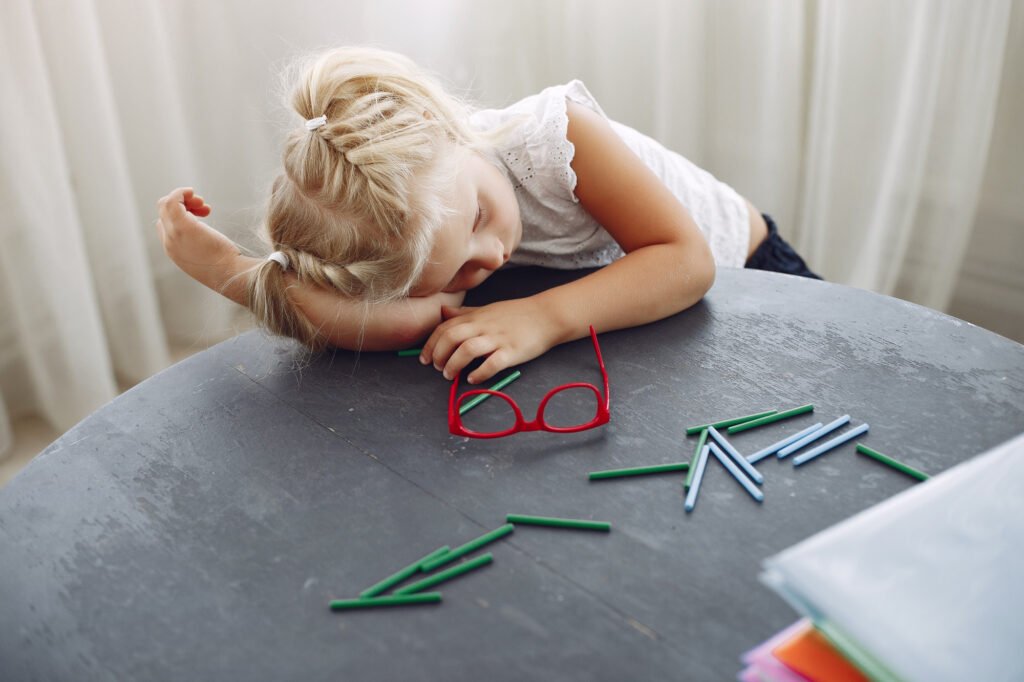
An overtired preschooler showing common signs of sleep deprivation in young children.
Most preschoolers need:
- 10-13 hours of sleep
- Little or no daytime sleep
- Consistent bedtimes and wake times
Common Preschool Sleep Challenges
- Bedtime stalling
- Fear of the dark
- Nightmares
- Leaving the bedroom repeatedly
Sleep Needs by Age Chart
| Age | How Much Sleep Does My Child Need? |
|---|---|
| Newborn (0-3 months) | 14-18 hours |
| Baby (4-11 months) | 12-15 hours |
| Toddler (1-2 years) | 11-14 hours |
| Preschooler (3-5 years) | 10-13 hours |
Signs Your Child May Not Be Getting Enough Sleep
Understanding how much sleep your child needs is only part of the picture.
Signs your child may need more sleep include:
- Frequent meltdowns
- Irritability
- Difficulty concentrating
- Hyperactive behaviour
- Waking tired
- Falling asleep in the car easily
- Increased clinginess
- Difficulty managing emotions
Overtired children often appear more energetic rather than sleepy.
Tips to Support Healthy Sleep
If you’re concerned about how much sleep your child needs, these simple habits can help:
- Maintain a consistent bedtime routine
- Keep wake-up times regular
- Ensure your child’s sleep environment is calm and comfortable
- Limit stimulating activities before bed
- Encourage plenty of daylight and physical activity
What Does the Research Say About Children’s Sleep?
Sleep is not simply “downtime” for children. Research shows that sleep plays a crucial role in brain development, learning, emotional regulation, physical growth, and overall health.
The American Academy of Sleep Medicine (AASM) recommends that infants, toddlers, and preschoolers receive age-appropriate amounts of sleep to support optimal health and development. Children who regularly achieve the recommended amount of sleep have improved attention, behaviour, learning, memory, emotional regulation, and quality of life (Paruthi et al., 2016).
Research has also found that inadequate sleep in childhood is associated with behavioural difficulties, poorer emotional regulation, increased risk of obesity, reduced academic performance, and poorer physical health outcomes (Chaput et al., 2017).
This is why understanding how much sleep your child needs is about much more than preventing tiredness. Sleep provides the foundation for healthy childhood development.
The Science Behind Sleep and Brain Development
During sleep, a child’s brain remains incredibly active.
Research suggests that sleep helps strengthen neural pathways involved in learning and memory. During deep sleep, the brain processes information gathered throughout the day and consolidates new skills and experiences.
This is particularly important during infancy and early childhood when brain development is occurring at a rapid rate.
A review published in Nature Reviews Neuroscience found that sleep supports memory formation, learning, emotional processing, and cognitive development throughout childhood (Rasch & Born, 2013).
For babies learning to crawl, toddlers learning language, and preschoolers developing social skills, sleep is an essential part of the learning process.
Sleep and Emotional Regulation
Parents often notice that their child becomes more emotional after a poor night’s sleep.
Research supports this observation.
Studies show that insufficient sleep can affect a child’s ability to regulate emotions, cope with frustration, and manage stress. Sleep-deprived children may experience:
- Increased irritability
- More frequent tantrums
- Greater emotional sensitivity
- Increased anxiety
- Difficulty managing frustration
A study published in Sleep Medicine Reviews found strong links between inadequate sleep and behavioural and emotional difficulties in children (Gregory & Sadeh, 2016).
This is one reason why a child who is overtired may appear hyperactive, emotional, or difficult to settle rather than obviously sleepy.
Sleep and Physical Growth
Many parents have heard that children grow while they sleep, and there is truth behind this saying.
Growth hormone is primarily released during deep sleep. This hormone plays a key role in physical growth, tissue repair, muscle development, and overall health.
Whilst children grow throughout the day, quality sleep provides an important opportunity for the body to support healthy growth and recovery.
Sleep and Immune Function
Sleep also helps support a healthy immune system.
Research has shown that sleep deprivation can negatively affect immune function, making it harder for the body to fight infections and recover from illness.
Children frequently encounter viruses and infections as they grow and explore their environment. Adequate sleep provides important support for their developing immune systems.
How Much Sleep Does My Child Need? Final Thoughts
Every child is unique, but understanding how much sleep your child needs can help you feel more confident about your little one’s sleep.
Remember, sleep is not about achieving perfection. It’s about supporting your child’s individual needs while creating healthy sleep habits that work for your family.
If you’re struggling with bedtime battles, frequent night waking, short naps or early mornings, support is available.
At Bluebell Sleep Consulting, I offer gentle, responsive sleep support for babies, toddlers and preschoolers, helping families achieve better sleep without using cry-it-out methods.
For safe sleep advice, visit The Lullaby Trust.
Ready for Better Sleep?
Book a free discovery call today and let’s create a personalised sleep plan for your child and family.
You may also enjoy reading my article about Free support for Babies, Toddlers & Preschoolers.
Follow on socials: Instagram, Facebook, LinkedIn.
References
American Academy of Sleep Medicine. (2016). Recommended Amount of Sleep for Pediatric Populations: A Consensus Statement of the American Academy of Sleep Medicine.
Chaput, J. P., Gray, C. E., Poitras, V. J., Carson, V., Gruber, R., Birken, C. S., MacLean, J. E., Aubert, S., Sampson, M., Tremblay, M. S. (2017). Systematic review of the relationships between sleep duration and health indicators in early childhood. BMC Public Health, 17(5), 855.
Gregory, A. M., & Sadeh, A. (2016). Sleep, emotional and behavioural difficulties in children and adolescents. Sleep Medicine Reviews, 27, 1-10.
Paruthi, S., Brooks, L. J., D’Ambrosio, C., Hall, W. A., Kotagal, S., Lloyd, R. M., Malow, B. A., Maski, K., Nichols, C., Quan, S. F., Rosen, C. L., Troester, M. M., Wise, M. S. (2016). Consensus Statement of the American Academy of Sleep Medicine on the Recommended Amount of Sleep for Healthy Children. Journal of Clinical Sleep Medicine, 12(6), 785-786.
Rasch, B., & Born, J. (2013). About sleep’s role in memory. Nature Reviews Neuroscience, 14(10), 683-694.